[Português abaixo]
The main ambition of TRAP – Freeing Our Rivers From Plastics is to remove as much plastic from rivers as possible, using natural barriers and mobilizing communities.
Plastic fragments such as bottles, shreds of clothes or unassorted fragments from industrial or agricultural usage are often found in river corridors or floodplains. During floods they are picked up as water levels raise, they may be trapped in trees or bushes along riverbanks, they may be deposited downstream when waters recede or they may be transported all the way to the ocean.
To understand transport, trapping and deposition of plastics, its temporal cycle and specific dynamics, we must understand the river, its flood and drought cycles and its hydraulics.
We will learn about flood-induced fluxes of plastics by monitoring TRAP’s rivers, before trying to extrapolate general patterns to other rivers. Sorraia is TRAP’s river in Portugal.
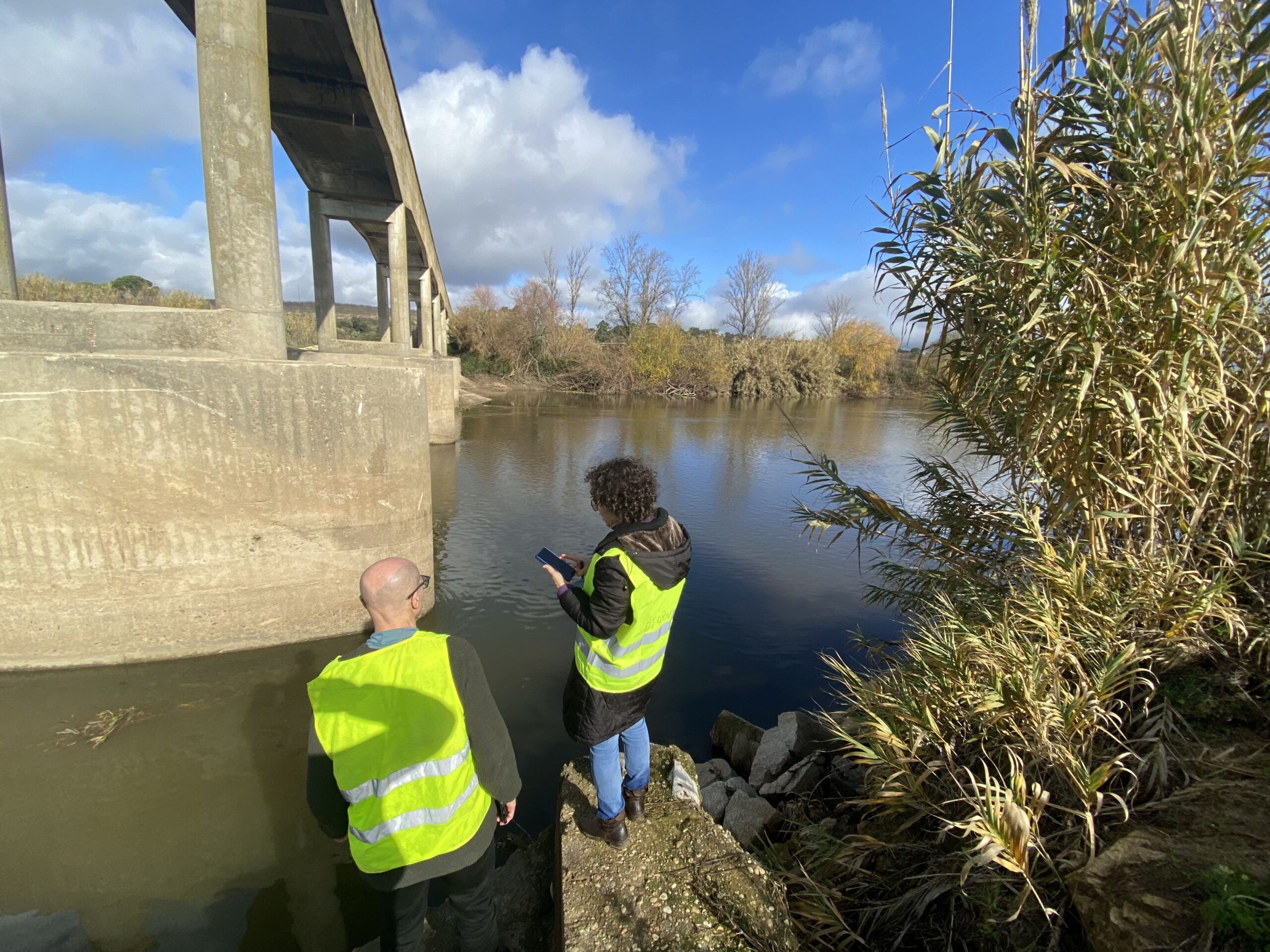
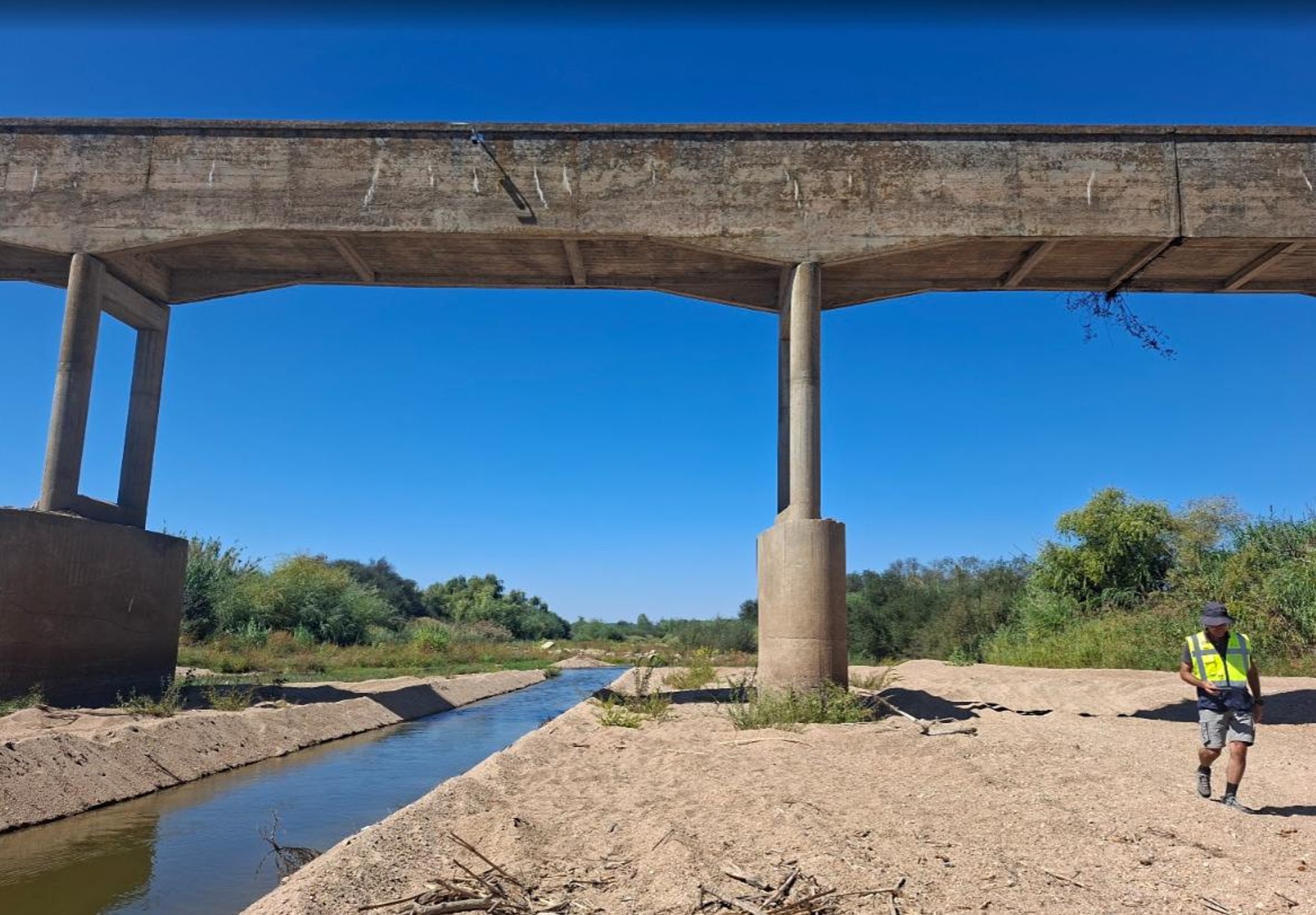
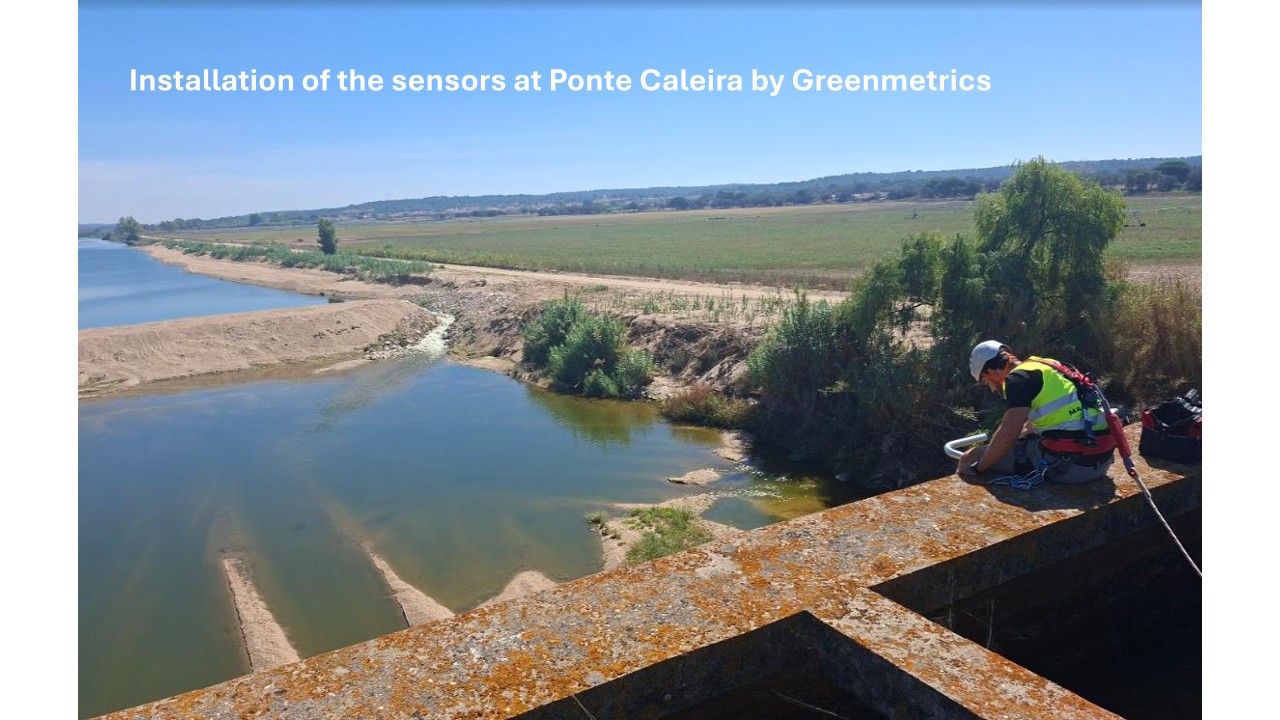
Monitoring Sorraia is thus very important to TRAP. This is why we have just installed a new hydrometric station at Ponte Caleira, in Couço, in its upstream reach.
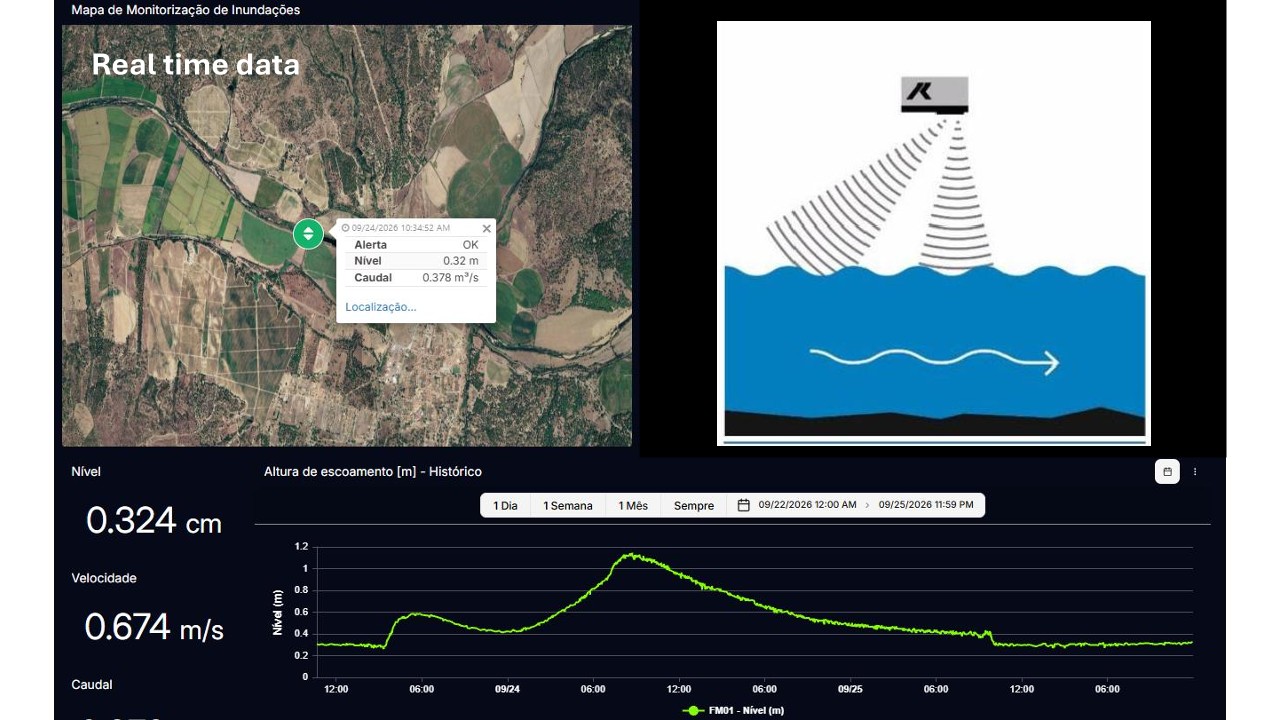
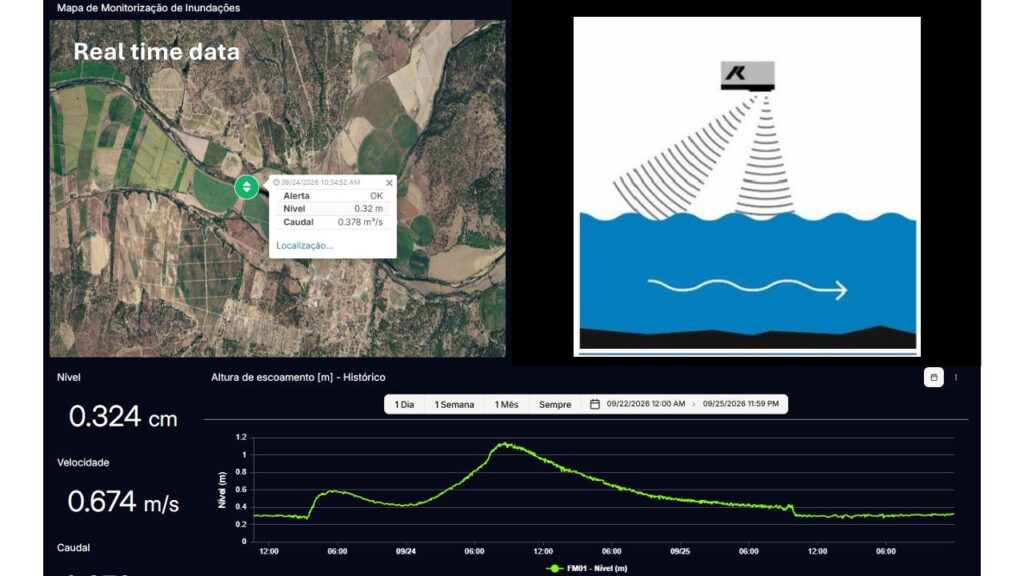
The new station will measure level and surface velocity, which can be empirically related to the mean cross-section velocity. The discharge can then be estimated by integrating the velocity over the flow area.
These observations, obtained in real time, will be assimilated into hydrodynamic models, allowing a sharper, more accurate forecast of flood – more accurate extension of inundation, time of inundation and period under water. And, by better understanding the water fluxes, these observations have also a positive impact in the characterization of the hotspots where plastics are trapped or deposited.
The resulting data will be made available to Câmara Municipal de Coruche (the local government), APA – Agência Portuguesa do Ambiente (the national water resources authority) and Associação de Regantes e Beneficiários do Vale do Sorraia, which owns the Ponte Caleira structure.
Câmara Municipal de Coruche will also ensure the maintenance of the monitored river cross-section – an essential contribution because reliable discharge calculations depend on preserving and periodically verifying its geometry.
This collaboration between research institutions, local government, the national water authority and those who manage the Sorraia’s hydraulic infrastructure is fundamental for transforming measurements into shared knowledge and, ultimately, into better-informed river management.
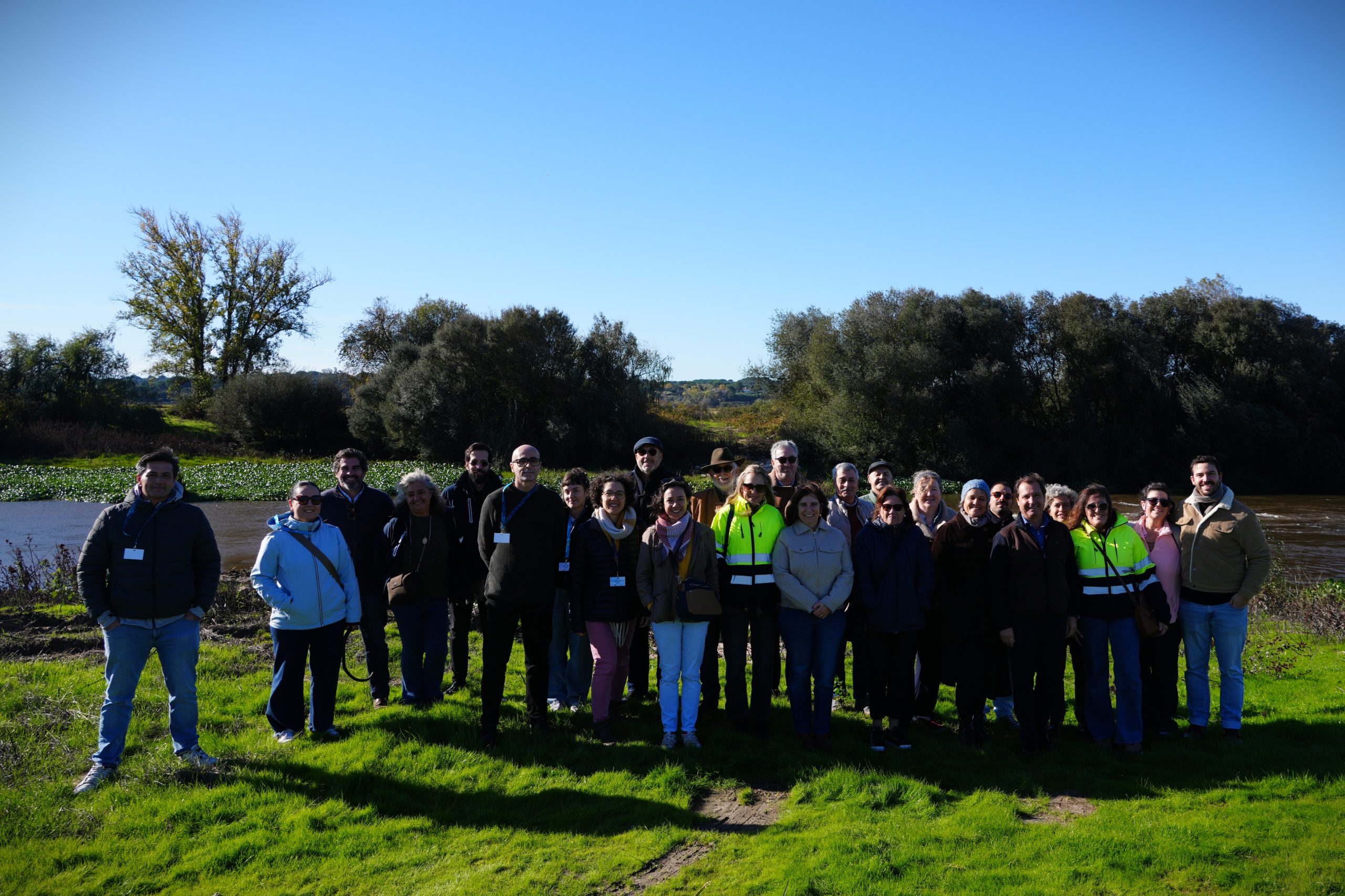
Today, we celebrate this achievement. By the end of the project, we will make available guidelines to design hotspots to trap and retain plastics in any river or estuary.
———— “” ———————
A principal ambição do TRAP – Libertando Os Nossos Rios de Plásticos é remover a maior quantidade de plástico possível dos rios, recorrendo a barreiras naturais e mobilizando as comunidades.
Fragmentos de plástico, como garrafas, pedaços de roupa ou fragmentos indiferenciados de uso industrial ou agrícola, são frequentemente encontrados nos corredores fluviais ou nas planícies de inundação. Durante as cheias, são arrastados à medida que os níveis da água sobem, podendo ficar retidos em árvores ou arbustos ao longo das margens, ser depositados a jusante quando as águas recuam ou ser transportados até ao oceano.
Para compreender o transporte, a retenção e a deposição de plásticos, o seu ciclo temporal e a sua dinâmica específica, precisamos de compreender o rio, os seus ciclos de cheias e secas e a sua hidráulica.
Iremos aprender sobre os fluxos de plásticos induzidos pelas cheias monitorizando os rios do projeto TRAP, antes de tentarmos extrapolar padrões gerais para outros rios. O Sorraia é o rio do TRAP em Portugal.
A monitorização do Sorraia é, assim, muito importante para o TRAP. Foi por isso que acabámos de instalar uma nova estação hidrométrica em Ponte Caleira, no Couço, no seu troço a montante.
A nova estação irá medir o nível e a velocidade de superfície, os quais podem ser empiricamente relacionados com a velocidade média na secção transversal. O caudal pode então ser estimado integrando a velocidade ao longo da área de escoamento.
Estas observações, obtidas em tempo real, serão assimiladas em modelos hidrodinâmicos, permitindo uma previsão de cheias mais exata e rigorosa – maior precisão na extensão da inundação, no tempo de início da inundação ou no período de submersão. E, ao compreendermos melhor os fluxos de água, estas observações têm também um impacto positivo na caracterização dos pontos críticos (hotspots) onde os plásticos ficam retidos ou se depositam.
Os dados resultantes serão disponibilizados à Câmara Municipal de Coruche (a autarquia local), à APA – Agência Portuguesa do Ambiente (a autoridade nacional de recursos hídricos) e à Associação de Regantes e Beneficiários do Vale do Sorraia, que é proprietária da estrutura de Ponte Caleira.
A Câmara Municipal de Coruche assegurará também a manutenção da secção transversal do rio – um contributo essencial, pois o cálculo fiável dos caudais depende da preservação e da verificação periódica da geometria da secção monitorizda.
Esta colaboração entre instituições de investigação, o poder local, a autoridade nacional da água e aqueles que gerem a infraestrutura hidráulica do Sorraia é fundamental para transformar as medições em conhecimento partilhado e, em última análise, em melhor gestão fluvial.
Hoje, celebramos esta conquista. Até ao final do projeto, iremos disponibilizar diretrizes para conceber zonas de retenção (hotspots) capazes de capturar e reter plásticos em qualquer rio ou estuário.